Analyzed uSwap user signups, activity, and feature interactions to identify patterns in user engagement and onboarding.
The figures below are illustrative examples while the live analytics dashboards are being prepared for publication.
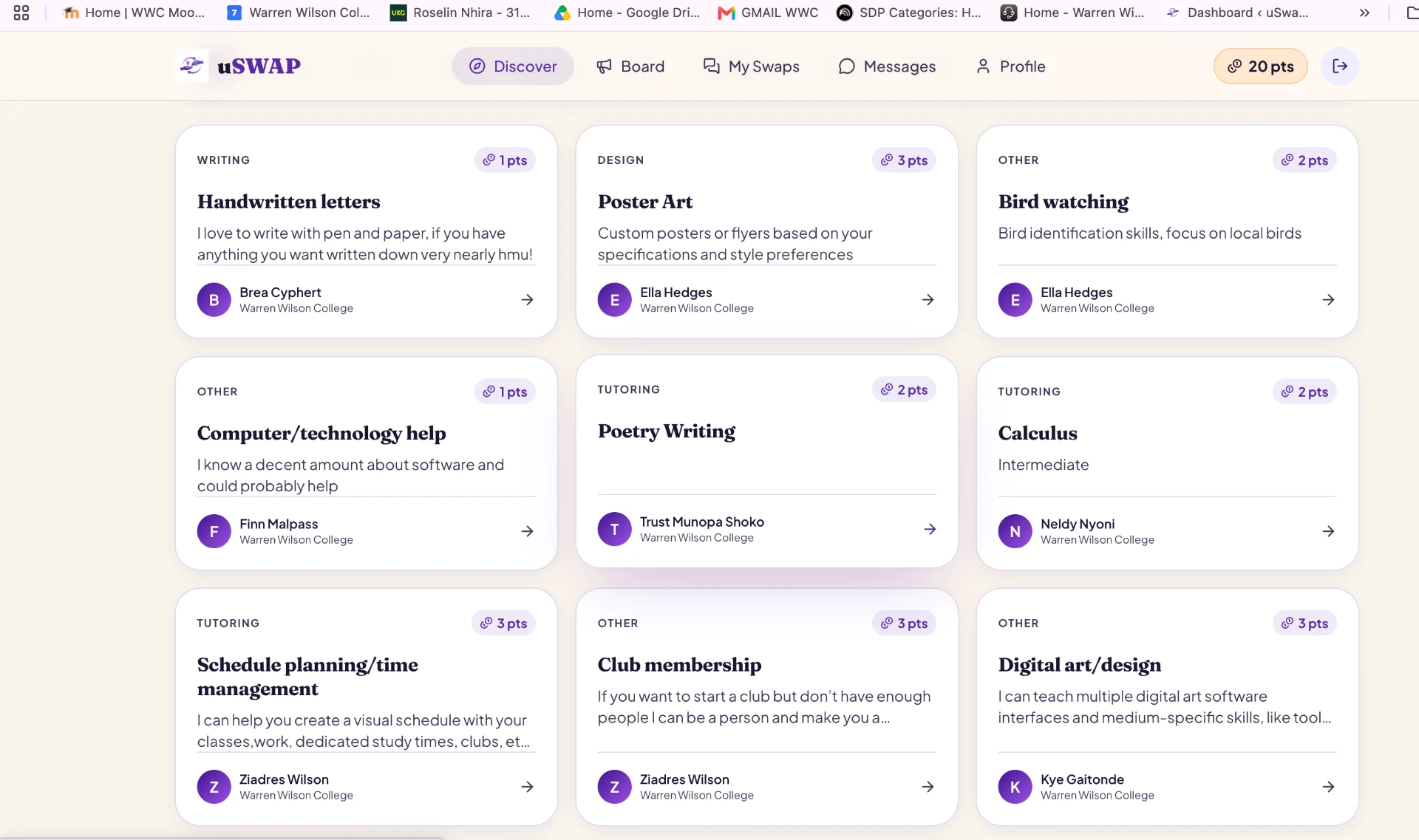
The uSwap Discover page, where students browse skills offered by other Warren Wilson students.
Overview
Product analytics for uSwap, focused on how students find the platform, what they do first, and where they stay engaged.
I track the full journey from first visit to completed swap: signups, profile creation, posting or requesting a skill, messaging, and leaving feedback after a swap.
User Signups
Steady week-over-week signup growth since launch, with spikes around campus events and orientation periods
Most signups arrive through word of mouth and direct links shared between students
Signup conversion improves noticeably when new students land on the Discover page first instead of the homepage
User Activity
Weekly active users cluster around Sunday and Monday evenings, when students plan their week
Returning users log in far more often than first-week users, so early experience is the main retention lever
A small group of highly active users accounts for a large share of all listings and messages
Feature Interactions
Discover is the most visited page by a wide margin, followed by Messages and My Swaps
Tutoring and design categories attract the most browsing, while practical help listings convert to swaps fastest
The points system is checked frequently, suggesting students treat it as a reputation signal
Onboarding
Users who add a profile photo and at least one skill in their first session are far more likely to complete a swap
The biggest drop-off happens between account creation and posting a first listing
Shortening the profile setup reduced the time to a user's first meaningful action
Swap Activity
Most swaps are completed within a week of the first message between two students
Swaps where both students have complete profiles close at a noticeably higher rate
Repeat swaps between the same pairs of students are common, especially for ongoing tutoring
Feedback
Students consistently ask for more categories and better ways to signal availability
Trust features, verified profiles and post-swap feedback, are the most requested improvements
Positive feedback after completed swaps strongly predicts whether a user returns the following month